How Data Science is Revolutionizing Agriculture
- richmondaddai46
- Sep 14, 2024
- 3 min read

Posted on 9/14/2024
Agriculture has always been a cornerstone of human civilization, but in the face of global challenges like climate change, food security, and resource scarcity, traditional farming methods alone are no longer sufficient. Enter data science—a powerful tool that is transforming agriculture and paving the way for smarter, more sustainable farming.

In this blog, I’ll dive into how data science is reshaping the agricultural landscape, helping farmers make more informed decisions, optimize crop yields, and conserve valuable resources.
1. Precision Agriculture: Farming with Pinpoint Accuracy
One of the most exciting ways data science is impacting agriculture is through precision agriculture. By using data from satellites, drones, and sensors in the field, farmers can now monitor their crops in real time. This means they can apply water, fertilizers, and pesticides exactly where and when they’re needed, reducing waste and maximizing efficiency.
For example, remote sensing data can show which parts of a field are thriving and which are struggling, allowing farmers to focus their efforts on areas that need attention. Machine learning models can then analyze this data and predict crop health, disease risks, and optimal harvesting times.

2. Predictive Analytics: Making Farming Future-Proof
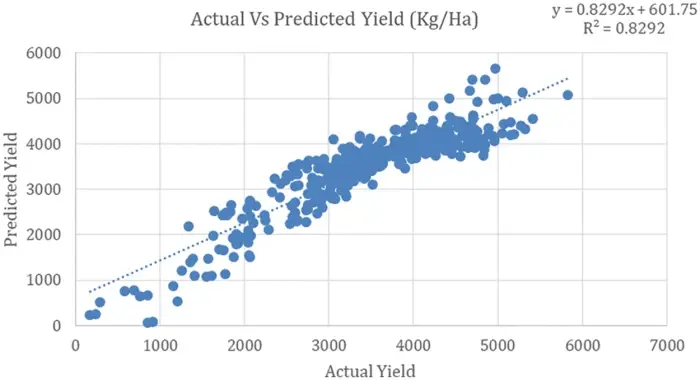
Farming has always been at the mercy of the weather, but data science is giving farmers a way to prepare for whatever nature throws their way. Predictive analytics uses historical weather data, soil conditions, and crop performance to forecast future outcomes.
For instance, farmers can use predictive models to anticipate droughts, floods, or pest infestations before they occur. This allows them to take proactive measures, such as altering irrigation schedules or choosing more resilient crop varieties. By reducing uncertainty, data science helps farmers make decisions that minimize risk and maximize crop yields.
3. Optimizing Water Usage: Fighting the Global Water Crisis
Water is one of the most precious resources in agriculture, and data science is playing a crucial role in optimizing its usage. Smart irrigation systems, powered by data from soil moisture sensors and weather forecasts, ensure that crops receive the exact amount of water they need—no more, no less.
In regions like northern Ghana, where drought is a constant threat, efficient water management is key to sustaining agriculture. By analyzing data on soil moisture and evapotranspiration rates, farmers can schedule irrigation based on real-time conditions rather than guesswork, reducing water waste and promoting more sustainable farming practices.

4. Data-Driven Solutions for Climate Change
Climate change is one of the biggest challenges facing agriculture today, and data science is helping farmers adapt. By analyzing historical climate data and modeling future trends, farmers can develop strategies for growing crops in changing conditions. This might include switching to drought-tolerant crops or adjusting planting schedules to avoid extreme weather events.
Additionally, data from Internet of Things (IoT) devices—such as temperature and humidity sensors—helps farmers track microclimate conditions in real time. With this information, they can make rapid adjustments to protect their crops from climate-related stress.

5. Beyond the Farm: How Data is Transforming the Supply Chain
The power of data science doesn’t stop at the farm gate. It’s also revolutionizing the entire agricultural supply chain. From predicting market demand to optimizing distribution routes, data analytics helps get food from farm to table more efficiently.
For example, blockchain technology allows for more transparent tracking of produce as it moves through the supply chain. This not only improves food safety but also reduces food waste by ensuring that products reach consumers in the freshest possible state.

Final Thoughts: The Future of Farming is Data-Driven
Data science is fundamentally changing how we grow, harvest, and distribute food. By harnessing the power of data, we can make farming more efficient, sustainable, and resilient in the face of global challenges. From precision agriculture to predictive analytics, these innovations are helping farmers produce more food with fewer resources, ensuring that we can feed a growing population while protecting our planet.
As an aspiring researcher, I’m excited to be part of this data-driven revolution in agriculture. Through my work, I hope to contribute to developing new technologies and methods that will help farmers around the world grow smarter and more sustainably.
Thank you for joining me on this journey! Stay tuned for more insights into the intersection of data science and agriculture.


Comments